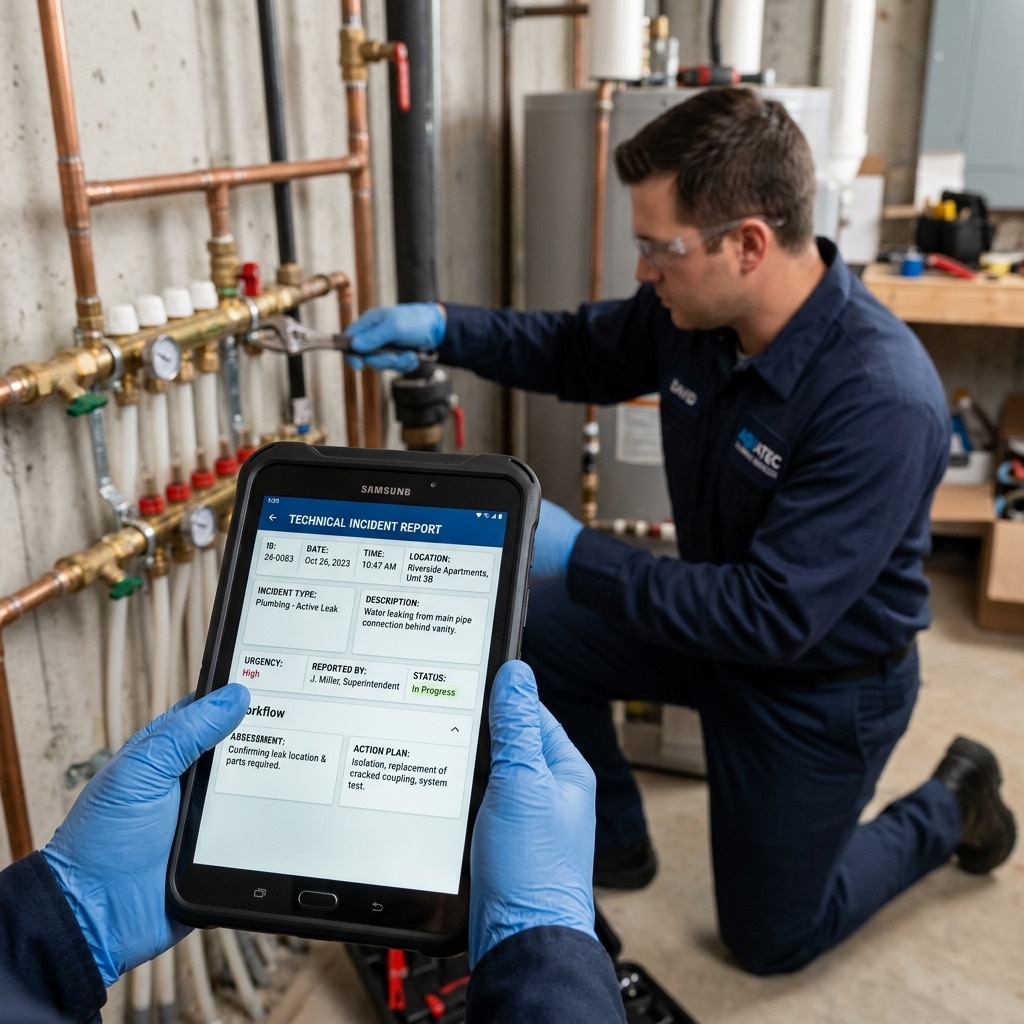
A leak reported by phone, a photograph received in a message and a quotation in an inbox: one incident can quickly become scattered. The first purpose of a shared tracking system is to bring these details into a record that the person handling the issue can find.
Collect useful information at the start
Ask for the building, exact location, date first noticed, a description and, when it is safe to take one, a photograph. Separate observations from assumptions. “Water on the entrance-hall ceiling since this morning” is more useful than an unconfirmed technical diagnosis.
An app form does not replace an emergency call. If there is immediate danger, contact the appropriate emergency or on-call service, then record the actions in the file.
Assign the next action
Every incident needs an owner and a next step: request more information, contact a contractor, approve a quotation or check completed work. Priority levels should reflect rules shared by the team, rather than only the reporter's concern.
Communicate when something useful changes
Acknowledge the report, explain the plan and give reasons for delays. Inform the people affected when work is scheduled or new information changes the situation. Avoid sharing personal contact details or photographs of homes with people who do not need them.
Close the record with evidence
Keep the contractor's report, invoice or confirmation that the problem has been resolved. If it returns, link the new report to the previous record. The history helps distinguish a one-off repair from a recurring defect.
Kopro brings incident reports and their follow-up together. To assess the improvement in your firm, measure your own acknowledgement and closure times over several weeks. No universal percentage saving can replace that observation.
Explore further
Ready for the next step?
See how Kopro can help with everyday property management.